Agronomic Analyses
Supporting Agronomic Decisions with Reliable Data
Agronomic analyses provide valuable insights into soil, water and plant health, supporting more accurate decisions on crop nutrition, irrigation and crop management.
At Hubel Verde, we carry out a range of agronomic analyses to identify constraints, optimise resources and improve crop performance.

Sap Analysis
Monitor the crop's nutritional status in real time.
Water Analysis
Assess irrigation water quality and identify potential constraints.
Soil Analysis
Evaluate soil fertility and define appropriate fertilisation programmes.
Soil Microbiome Analysis
Assess the biological activity and health of the soil.
Request an analysis
Request an agricultural analysis and discover how to optimize your production based on concrete data. Our team of agronomists is ready to interpret the results and create a tailored action plan for your farm.
Agronomic Analyses available at Hubel Verde
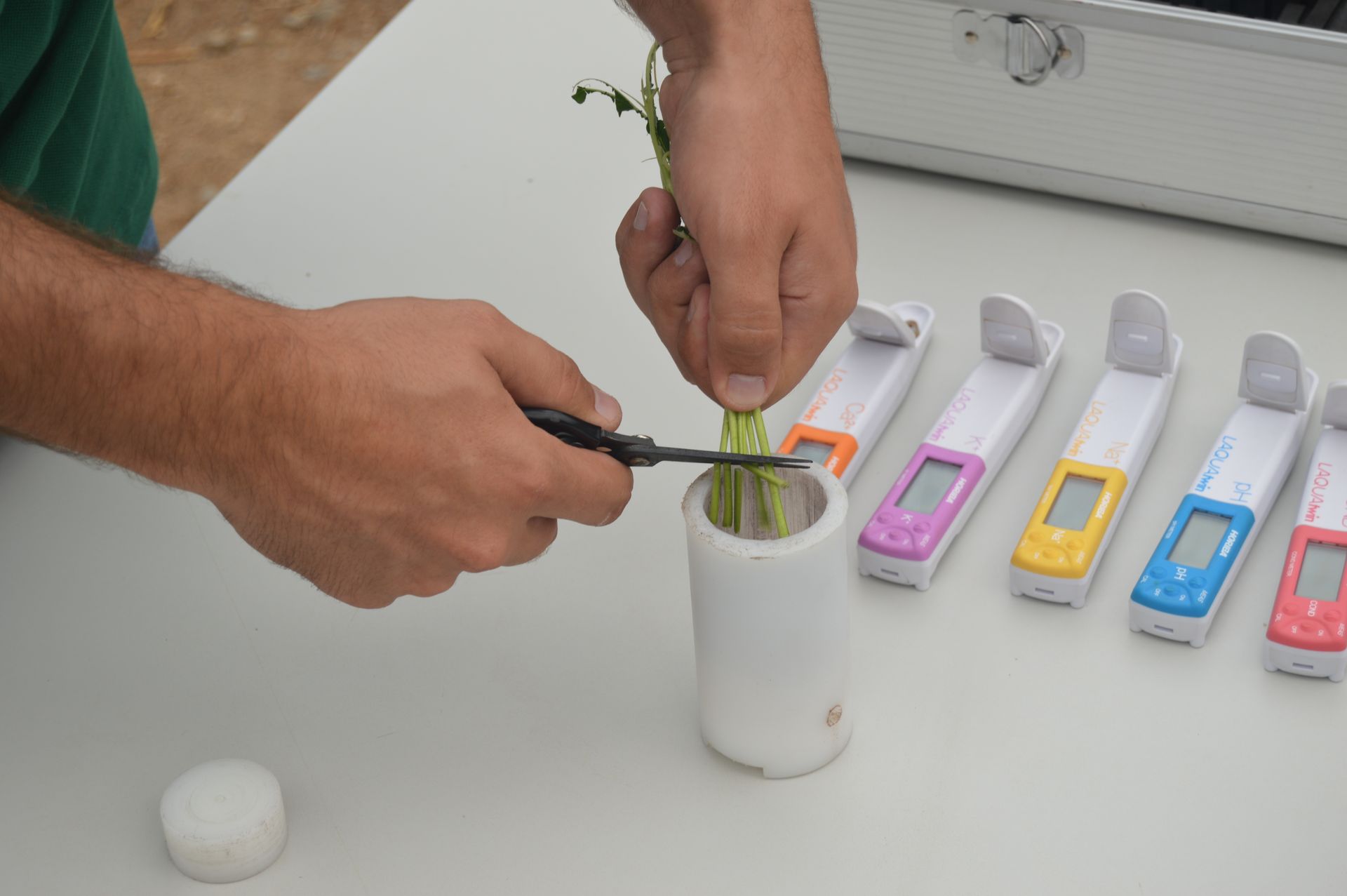
Sap Analysis
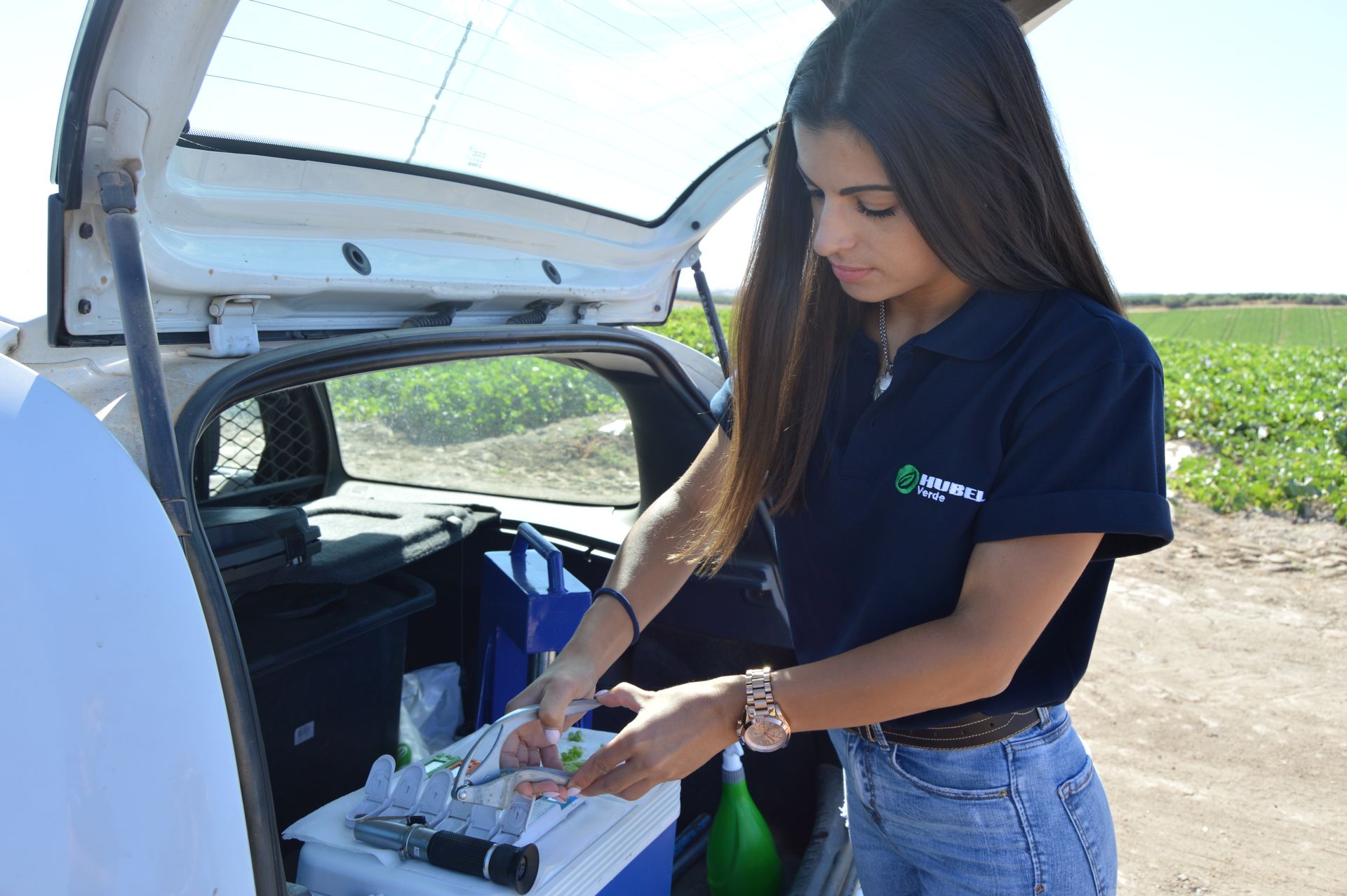
Sap analysis measures the concentration of nutrients within the plant, providing valuable insights into its nutritional status throughout the growing season.
The results enable our agronomists to make more accurate recommendations and adjust fertilisation strategies according to the crop's needs.
- Early identification of nutritional imbalances;
- Supports more accurate fertilisation programmes.
Nitric oxide (N‑NO₃)
Potassium (K)
Calcium (Ca)
Sodium (Na)
pH
Electrical conductivity
ºBrix
Other agronomic analyses available
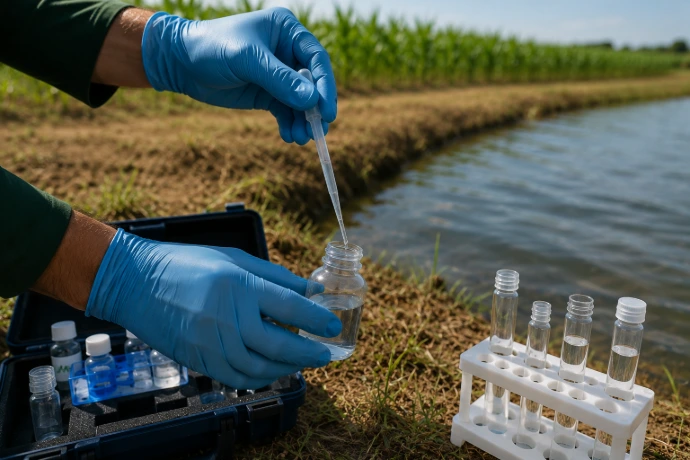
Water Analysis
Water quality directly influences irrigation performance and crop health. Analysing irrigation water helps identify potential constraints before they affect production.
- Assess water quality before irrigation.
- Support irrigation management decisions.
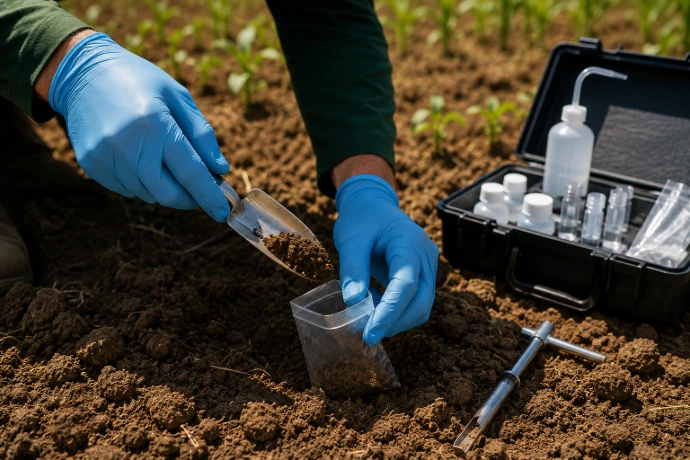
Soil Analysis
Soil analysis provides essential information on nutrient availability, organic matter and soil characteristics, forming the basis of an effective fertilisation strategy.
- Optimise fertiliser investment.
- Improve soil management.
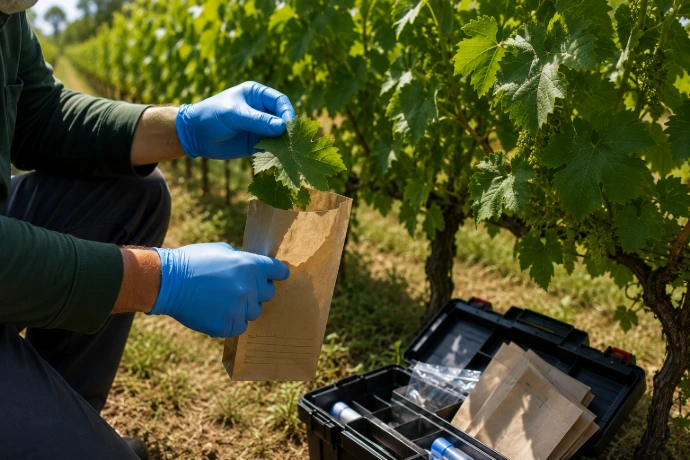
Leaf Analysis
Leaf tissue analysis evaluates the crop's nutritional status throughout the growing season.
- Detect nutrient deficiencies.
- Fine-tune fertilisation programmes.
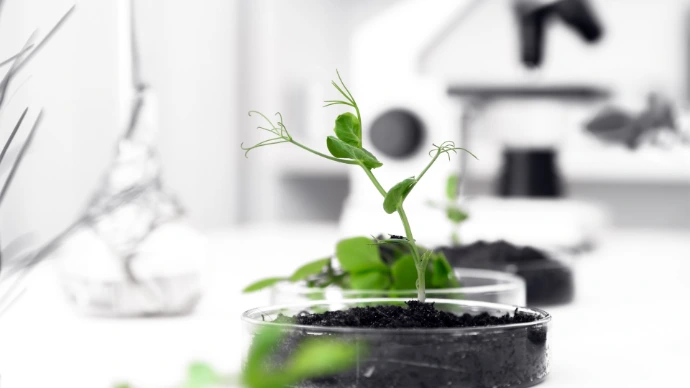
Soil Microbiome Analysis
Assess the diversity and activity of beneficial soil microorganisms.
- Evaluate soil biological health and productive potential.
- Support more efficient management of the soil microbiome.
For soil, water, sap, foliar and microbiological analyses, we work with accredited partner laboratories, ensuring reliable results to support technical decision-making.
Why agronomic analyses matter
Without reliable data, agronomic decisions often rely on assumptions. Agronomic analyses provide objective information that supports more effective crop management.
A variety of analysis allows the assessmentof soil quality, irrigation water, and the nutritional status of plants, helping to adjust fertilization and avoid problems that could compromise production.
Example
A soil analysis can identify low phosphorus availability before it affects crop development. Based on these results, fertilisation can be adjusted at the right time, helping to optimise nutrient use, improve crop performance and avoid unnecessary input costs.
Our latest content
Check out what's new in our company!
Talk to us
Do you have a question or need support for your crop? Send us your request and we will get in touch with you.
Specialized technical support
Quick and personalized response
FREQUENTLY ASKED QUESTIONS
Direct answers to your questions.
Agronomic analyses can be carried out at different stages of the crop cycle, depending on the objective. They are particularly valuable before crop establishment, during vegetative growth, when irregular crop development is observed, or whenever there is a need to optimise fertilisation and irrigation strategies.
The most appropriate analysis depends on the information you need. Soil analyses assess soil fertility and nutrient availability, water analyses evaluate the quality of irrigation water, leaf analyses determine the crop's nutritional status, and sap analyses provide real-time insights into nutrient uptake by the plant.
The results support informed agronomic decision-making by helping optimise fertilization, irrigation and crop management. When integrated into ongoing agronomic advisory, they help identify nutritional requirements, correct imbalances and make more efficient use of available resources.
Soil analysis assesses the availability of nutrients in the soil, helping to determine its fertility and nutrient-supplying capacity. Leaf analysis evaluates the crop's nutritional status by measuring the nutrients present in the plant tissues. Sap analysis, in contrast, provides real-time insight into the nutrients currently being taken up and utilised by the plant, making it a valuable tool for adjusting fertilization throughout the growing season.