Assisted Pollination
What is Assisted Pollination?
Assisted pollination is a technical solution that complements natural pollination, promoting more effective fertilisation and improved fruit set, particularly in crops such as avocado, kiwifruit, almond and berries.
It is recommended when natural pollination is insufficient due to limited pollinator activity, adverse weather conditions or poor flowering synchronisation.
At Hubel Verde, we provide assisted pollination services using controlled spraying technology to ensure uniform pollen distribution across flowers, contributing to higher crop productivity and improved fruit quality.
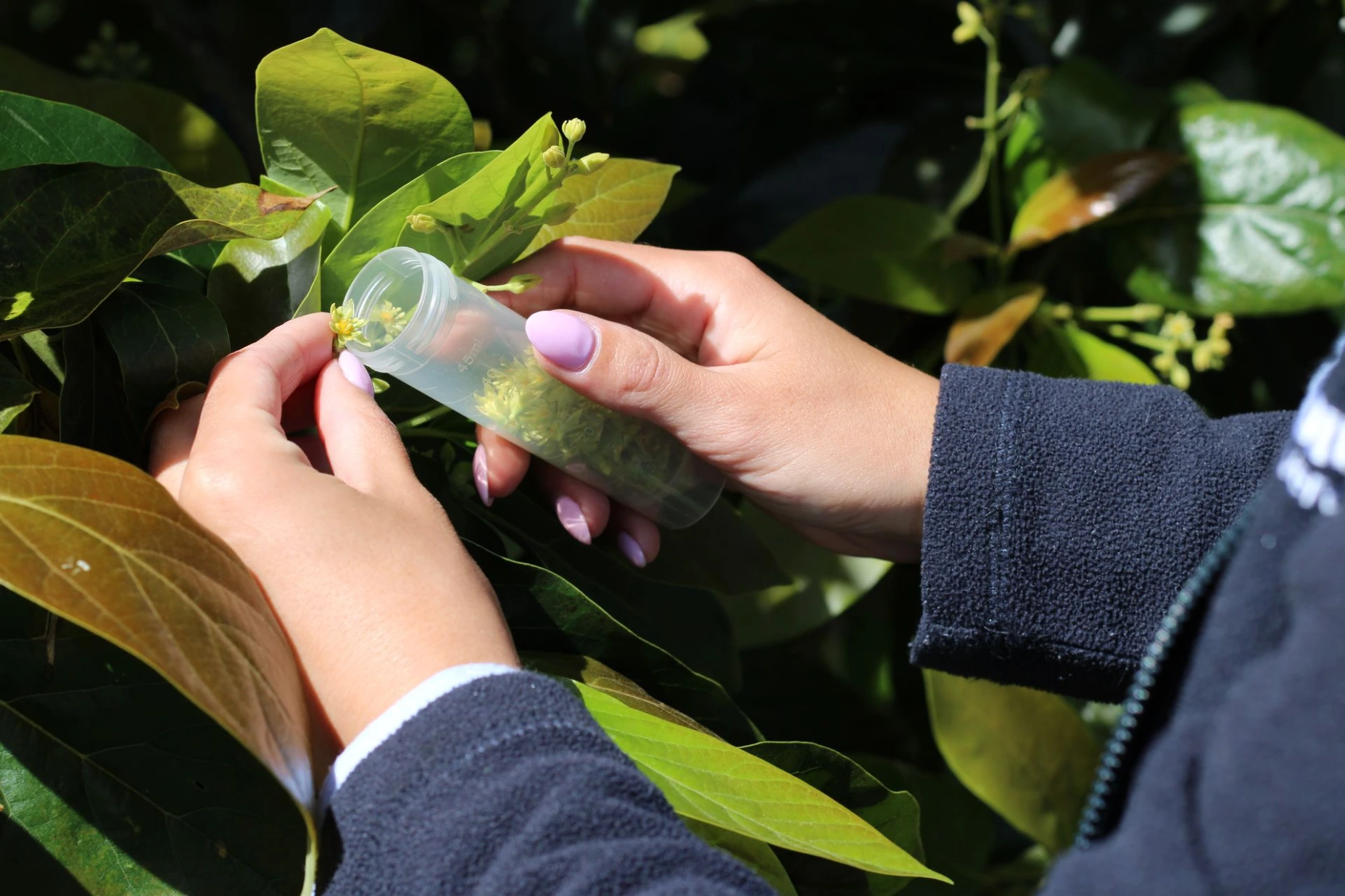
Are your crops reaching their full flowering potential?
Discover how assisted pollination can improve pollination efficiency and support more consistent yields.
CHALLENGES OF NATURAL POLINATION
When should Assisted Pollination be considered?
In some crops, natural pollination alone may not ensure optimal yield and fruit quality.
Low pollinator activity
A decline in bee populations and other pollinating insects can significantly reduce flower fertilisation.
Adverse weather conditions
Rain, strong winds and extreme temperatures during flowering can limit pollinator activity and reduce pollen viability.
Lack of synchronised flowering
In orchards with different varieties, poor synchronisation of flowering may compromise effective pollination.
Large production areas
In extensive orchards, natural pollination may be uneven, resulting in areas with lower fruit set and reduced productivity.
BENEFITS
Benefits of assisted pollination
Higher fruit set
Ensures that a greater number of flowers are successfully fertilised, increasing the crop's productive potential.
Improved fruit uniformity
Promotes more uniform fruit development, resulting in greater consistency in size, shape and quality.
Reduced losses
Minimises yield losses caused by insufficient pollination, improving profitability.
Greater production reliability
Helps reduce the impact of adverse weather conditions during flowering, making production more predictable and stable.
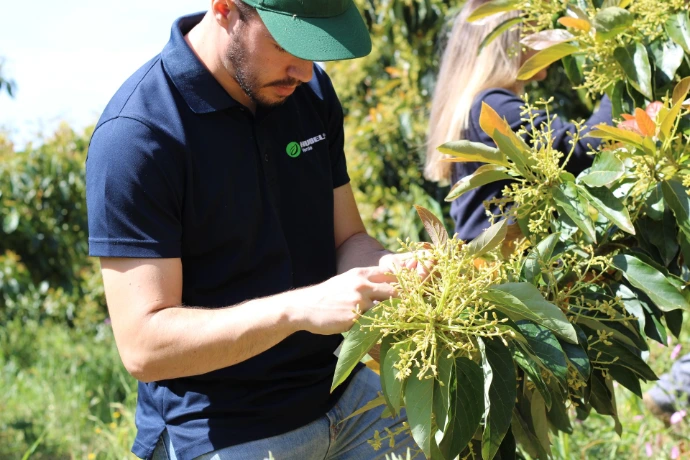
In crops such as avocado, assisted pollination can significantly improve fruit set, particularly during periods of low pollinator activity.
At Hubel Verde, we work with specialised partners and precision application technologies to deliver efficient, controlled pollination solutions tailored to the specific requirements of each crop.
Contact us
Do you have a question or need support for your crop? Send us your request and we will get in touch with you.
Specialized technical support
Quick and personalized response
FREQUENTLY ASKED QUESTIONS
Direct answers to your questions:
Assisted pollination is recommended when natural pollination may not be sufficient to ensure good fertilization of the flowers. Situations such as low pollinator activity, adverse weather conditions during flowering, or lack of floral synchronization may justify its use.
No. Its effectiveness depends on the species, variety, and biology of the crop. It is especially suitable for crops whose productivity heavily relies on efficient pollination, such as avocado, making a prior technical assessment important.
No. Assisted pollination does not replace natural pollinators, but complements their action when natural conditions do not allow reaching the productive potential of the crop.