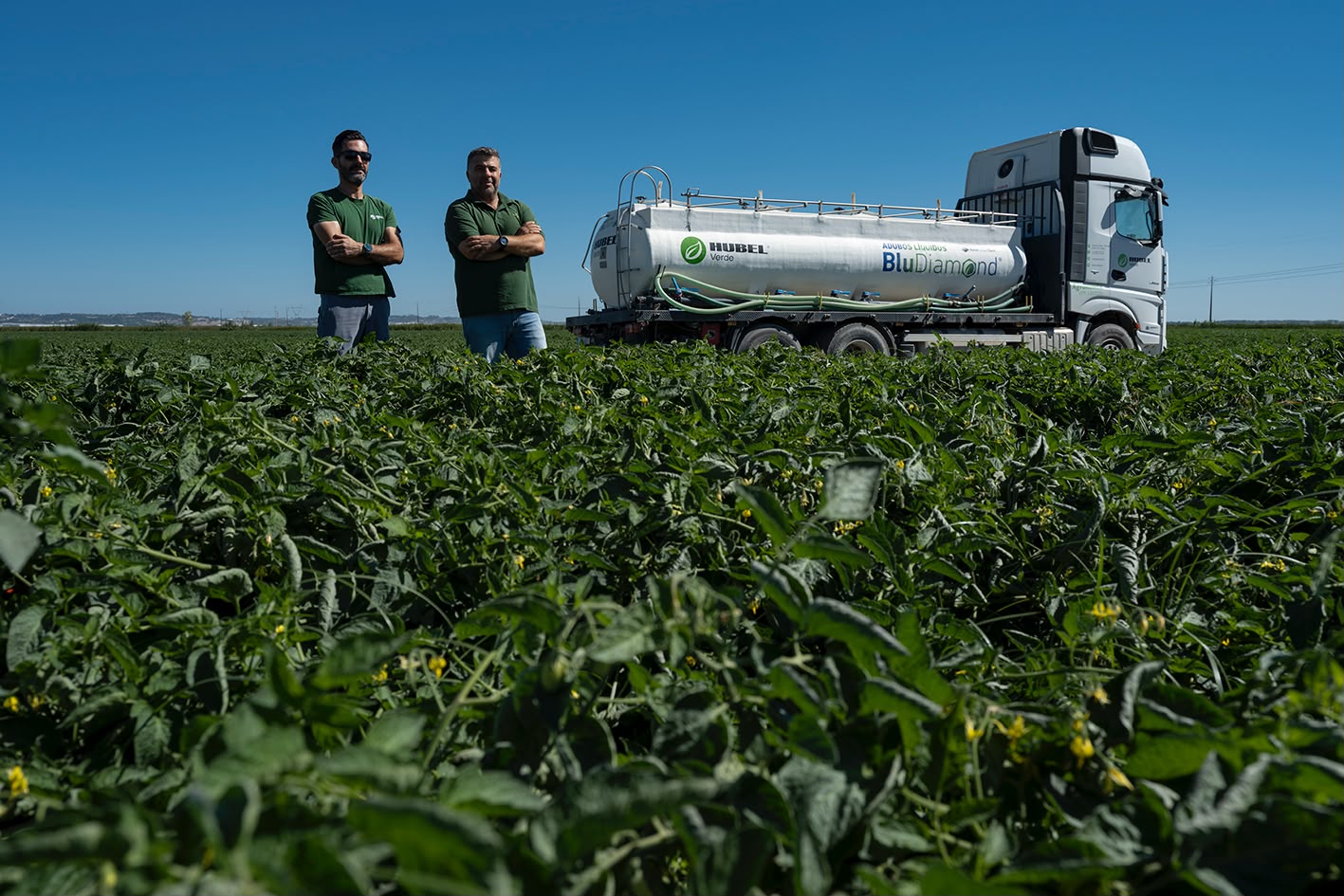
When technology complements nature
Pollination is one of the most important biological processes for the success of many agricultural crops. It is estimated that around 70% of crops depend, either fully or partially, on pollination.
This process consists of the transfer of pollen from the anther to the stigma of the flower and constitutes the stage that precedes fertilization, that is, the union of male and female gametes that will subsequently allow the formation of seeds and the development of the fruit.
In kiwifruit, the quality of pollination directly influences fruit set, size, shape and final fruit quality.
Each crop is unique.
The strategy must be unique as well.
Our agronomists work with you to develop strategies tailored to the needs of your farm.
Despite its importance, pollination currently faces several challenges. Declining populations of insect pollinators, weather conditions during flowering, poor synchronisation between polliniser varieties and the availability of viable pollen can significantly compromise the productive potential of orchards.
To address these limitations, in 2022 Hubel Verde, in partnership with Bisari Agroinnovation, developed a specialised assisted pollination service, which is currently used in crops such as kiwifruit, avocado, watermelon, almond and various stone fruit species.
The service combines agronomic expertise, flowering monitoring, pollen quality assessment and high-precision application technology, helping to maximise pollination efficiency under commercial growing conditions.
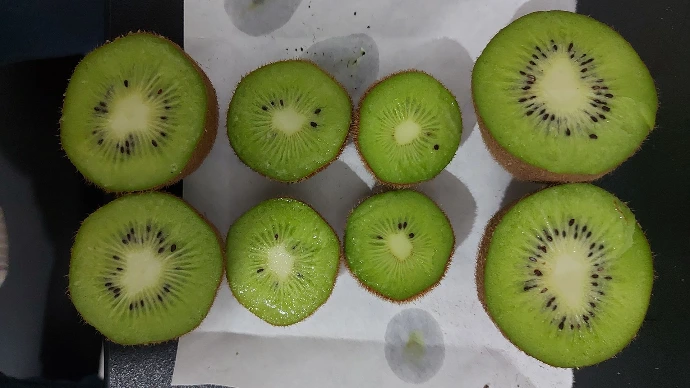
Examples of kiwi fruits with different levels of pollination, evidenced by the number of seeds present.
Why is kiwi pollination particularly demanding?
Kiwifruit (Actinidia deliciosa) is a dioecious crop, meaning that male and female flowers are borne on separate plants.
For effective fertilisation to occur, successful pollination must take place first. This requires viable pollen produced by male flowers to be transferred to female flowers when they are at their most receptive stage.
However, successful fertilisation also depends on other physiological factors, meaning that good pollination is essential, but not always sufficient.
Pollen quantity and quality vary throughout the flowering period of male plants, while environmental factors such as high temperatures or low relative humidity can reduce pollen viability and limit pollination success.
There is another important characteristic to consider: kiwifruit flowers produce virtually no nectar, making them less attractive to many insect pollinators. It is therefore essential to adopt crop management practices that encourage the presence of these insects in the orchard and, whenever necessary, to use complementary pollination solutions.
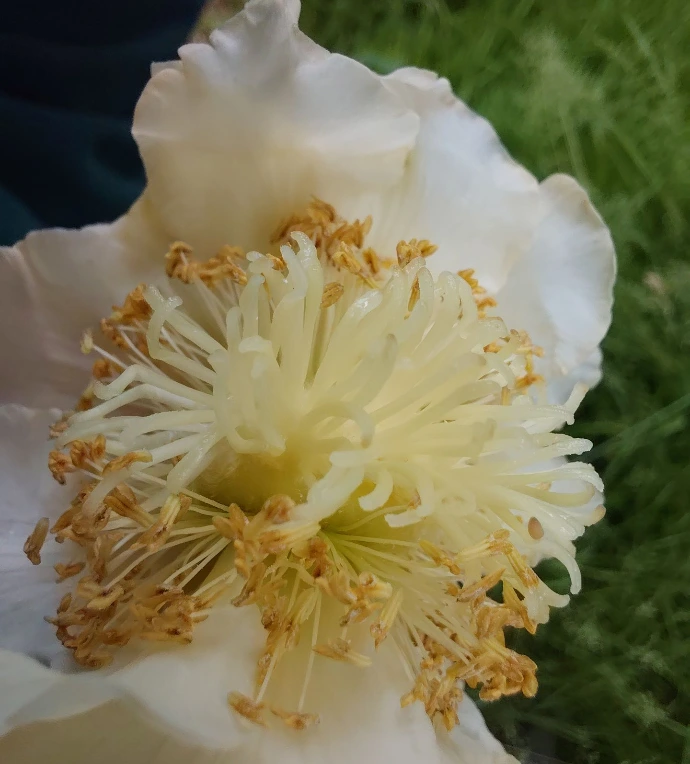
Female flower.
Assisted pollination in kiwi: from pollen collection to application
Hubel Verde's assisted pollination service for kiwifruit begins with the careful selection of male flowers and pollen collection.
Before application, each batch is assessed for viability and germination rate, ensuring that only pollen with high germination potential is used.
After being stored under controlled conditions, the pollen is incorporated into a specific liquid matrix and applied using Martignani ultra-low-volume sprayers equipped with electrostatic technology.
Each intervention is planned in advance according to the flowering stage, weather conditions and pollen availability, with the aim of ensuring that application takes place when female flowers are at their most receptive.
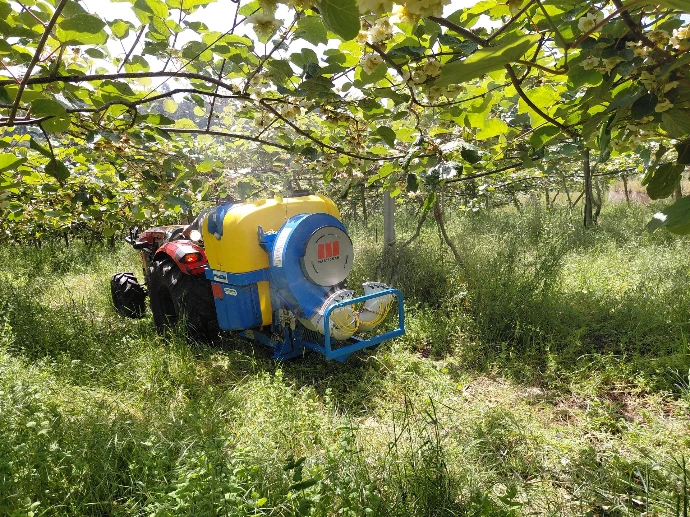
Application equipment.
Martignani equipment is distributed exclusively in Portugal by Hubel Verde.
Electrostatic technology in assisted pollination
Electrostatic technology is one of the main distinguishing features of this service.
During application, droplets receive an electrical charge that promotes their deposition onto the vegetation, providing more uniform coverage of floral surfaces and increasing the likelihood of pollen coming into contact with the flower stigmas.
This principle significantly improves application coverage, increases pollen deposition efficiency and reduces the volume of spray solution required.
As a result, pollen can be used more efficiently, reducing waste and promoting more uniform pollination.
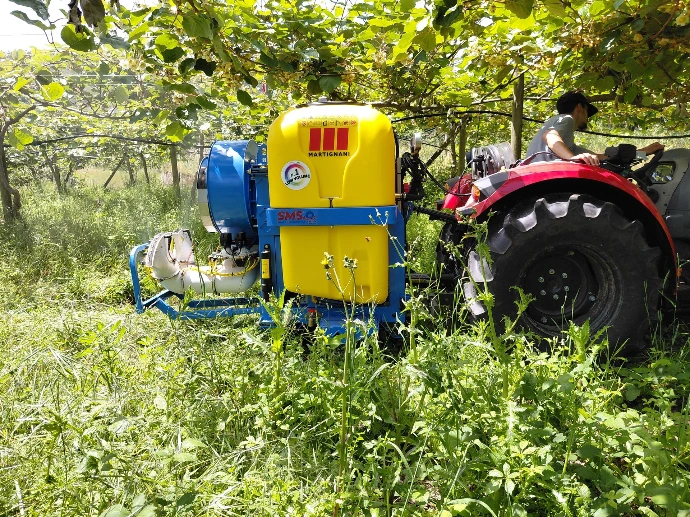
Electrostatic application.
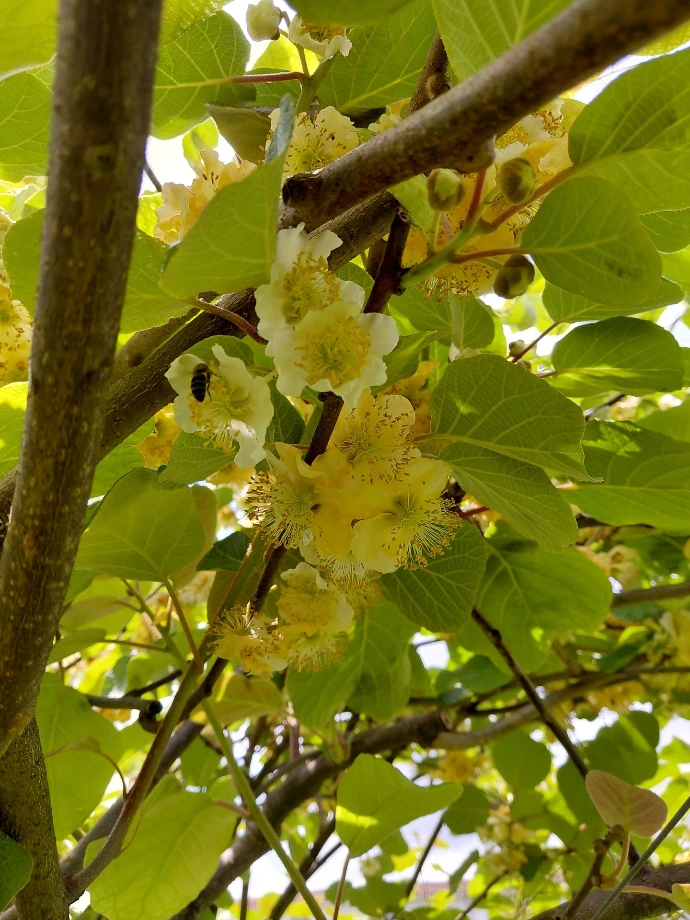
Bee on male flower.
Results of assisted pollination in kiwifruit under commercial growing conditions
Over the past four years, Hubel Verde has carried out several trials in commercial kiwifruit orchards, involving different varieties, pollen rates, application timings and intervention strategies.
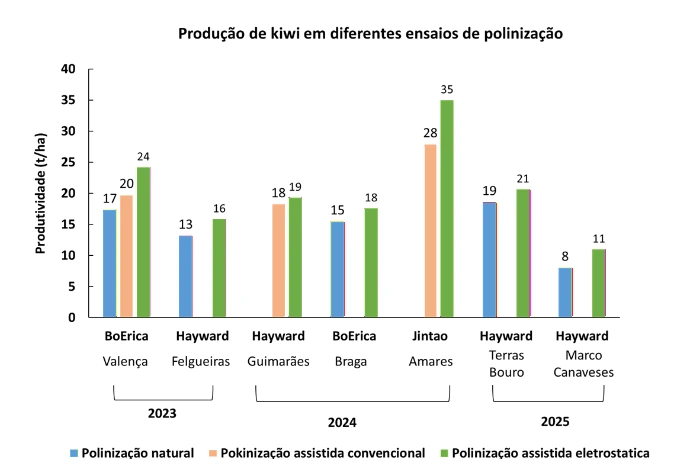
The results showed consistent gains in productivity and profitability compared with exclusively natural pollination or conventional assisted pollination methods, using either dry or wet application.
The trials also demonstrated more efficient pollen use, allowing application rates to be reduced without compromising results. At the same time, reductions in application time and labour requirements were observed, contributing to greater operational efficiency.
Even in growing seasons affected by adverse weather conditions and highly uneven flowering, results remained consistent, delivering benefits in terms of both orchard productivity and profitability.
Results of trials between 2023 and 2025.
Technical expertise and technology in kiwifruit pollination
Assisted pollination goes far beyond simply applying pollen. Its success depends on monitoring flowering, rigorously assessing pollen quality, selecting the right timing for intervention and using the appropriate application technology.
Hubel Verde's experience under commercial growing conditions shows that combining these factors can increase pollination efficiency and enhance orchard productivity.
At a time when pollinator availability, climate change and the need to improve production efficiency are creating new challenges for growers, assisted pollination in kiwifruit is becoming an increasingly relevant technical tool.
Combining agronomic expertise, innovation and field validation makes it possible to optimise this critical process and contribute to more consistent, profitable and sustainable production.
Contact us
Do you have a question or need support for your crop? Send us your request and we will get in touch.