Let's ensure a good start in Corn Culture
Technical Recommendation for July

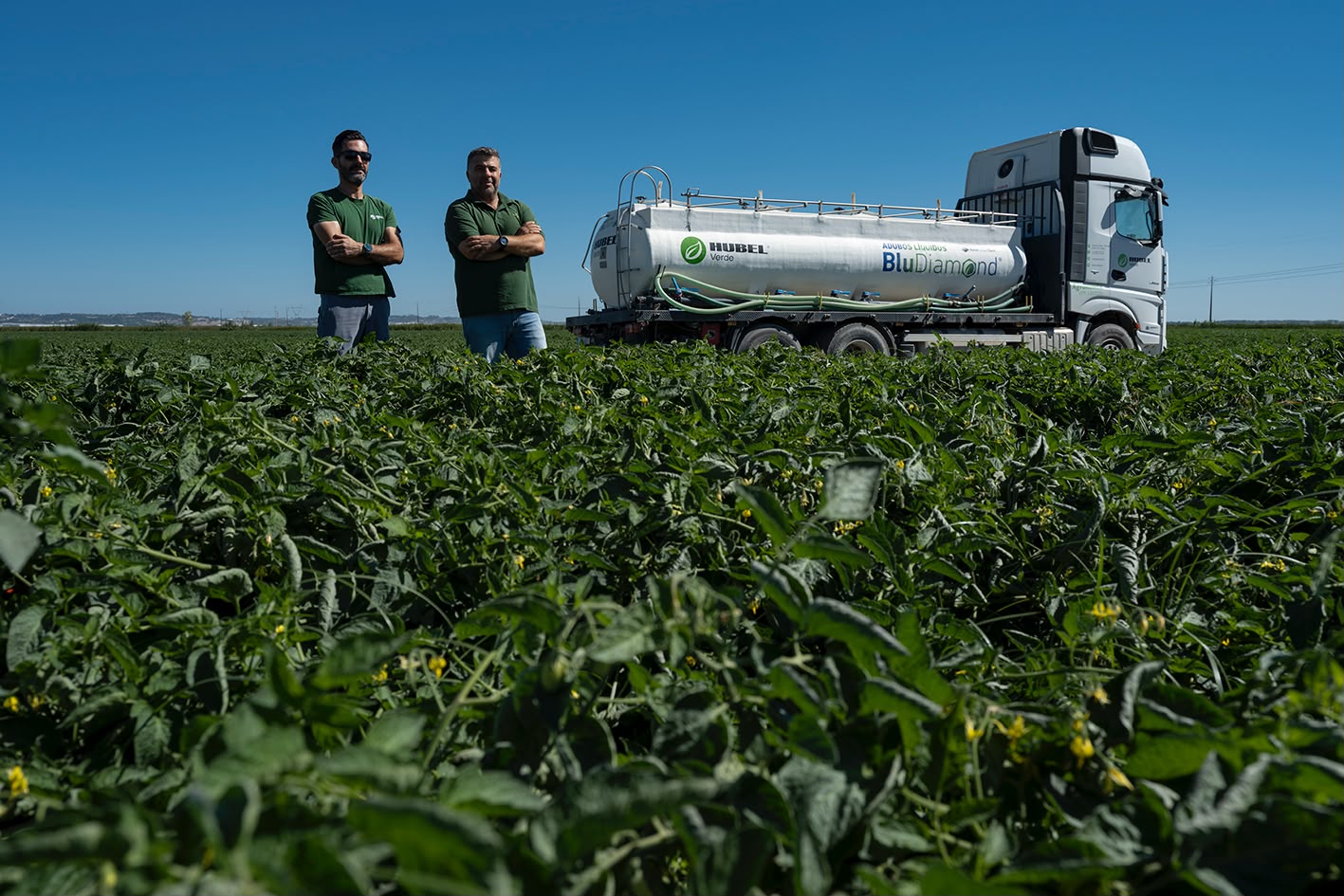
Duarte Deolindo, our technical and sales consultant in the Santarém area, is the author of the Recommendation by Hubel Verde for July.
With the experience of someone who closely follows the field, he shares with us his suggestions for this stage of the campaign, focusing on what really matters in the corn culture.
Each crop is unique.
The strategy should be too.
Our agronomists will work with you to develop strategies tailored to the needs
of your farm.
Corn on the way: a good setup is half the battle
We are currently in the final phase of installing the corn crop, the most important arable crop in Portugal, with an approximate area of 150,000 hectares between the mainland and the islands. Whether the production goal is grain corn or silage corn, the guidelines are the same. As Duarte highlights:
“It is very important to control weeds right from the start, particularly the Devil's fig (Datura stramonium), its toxicity levels are harmful to both human and animal health.”
Heat, salinity, and lack of water: how to protect corn from abiotic stress
The stress caused by water regulation issues and high salinity is one of the major challenges in corn cultivation. According to Duarte:
“It is important to have a good water balance, both for the natural development of the plant and for good nutrient absorption. High levels of soil salinity are antagonistic to good absorption of the cations Calcium and Potassium.”
This factor becomes especially critical from the V10 phase to R2 (milky grain), with greater impact during flowering, which can compromise fertilization and, consequently, final production. To this end, Duarte recommends:
- Resid MG at sowing — a mycorrhizal fungus (Glomus iranicum var. tenuihypharum) that promotes root expansion and improves the utilization of water and nutrients, especially in soils with high salinity, from where the fungus was selected.
“A larger root area reflects better soil exploration and a greater capacity for assimilation, having direct effects on reducing plant stress.”
- Dalgin Mg in the V10 phase — with algae, magnesium, boron, and molybdenum, to give the plant a boost at the right time.
“It corrects possible magnesium deficiencies, being subsequently an asset during flowering, due to the presence of boron in its composition.”
Micronutrients: small, but they make all the difference
Even with good management of macronutrients, deficiencies in micronutrients can compromise the success of the campaign. Duarte draws attention to two essentials:
- Zinc, crucial in grain formation and starch synthesis.
- Manganese, essential for photosynthesis and protein synthesis.
How to ensure your presence? “I recommend the application of Codaquel (Zn-Mn), applied together with the post-emergence herbicide. This product formulated with zinc and manganese will be our tool to ensure good production.”
Smart nitrogen: higher yields, less waste
Nitrogen is the most important nutrient in corn cultivation, but it is essential that its application is done in a strategic and phased:
Ideal distribution:
- 15% at planting
- 70% between V10 and the end of flowering
- 15% at grain filling
Corresponding approximately to:
- 20 kg of nitrogen per ton of grain
- 12 kg per ton of dry matter (silage)
To improve efficiency:
“I suggest the foliar application of Utrisha N, between the V6 and V8 stages. The bacteria present in this product converts atmospheric nitrogen and makes it available to the plant.” In addition: “The most important thing is that this bacteria allows the plant to be able to ‘self-regulate’ and ensure the necessary nitrogen levels at key moments of its need, even functioning under conditions of reduced nitrogen fertilizer.”
Corn: focus on what really matters
Each technical intervention is a step towards more efficient and profitable production.
If you need support to apply these recommendations in your crop, talk to us. The Hubel Verde team is available to assist in the field and adjust strategies to your case.
Contact us
Do you have a question or need support for your crop? Send us your request and we will get in touch.