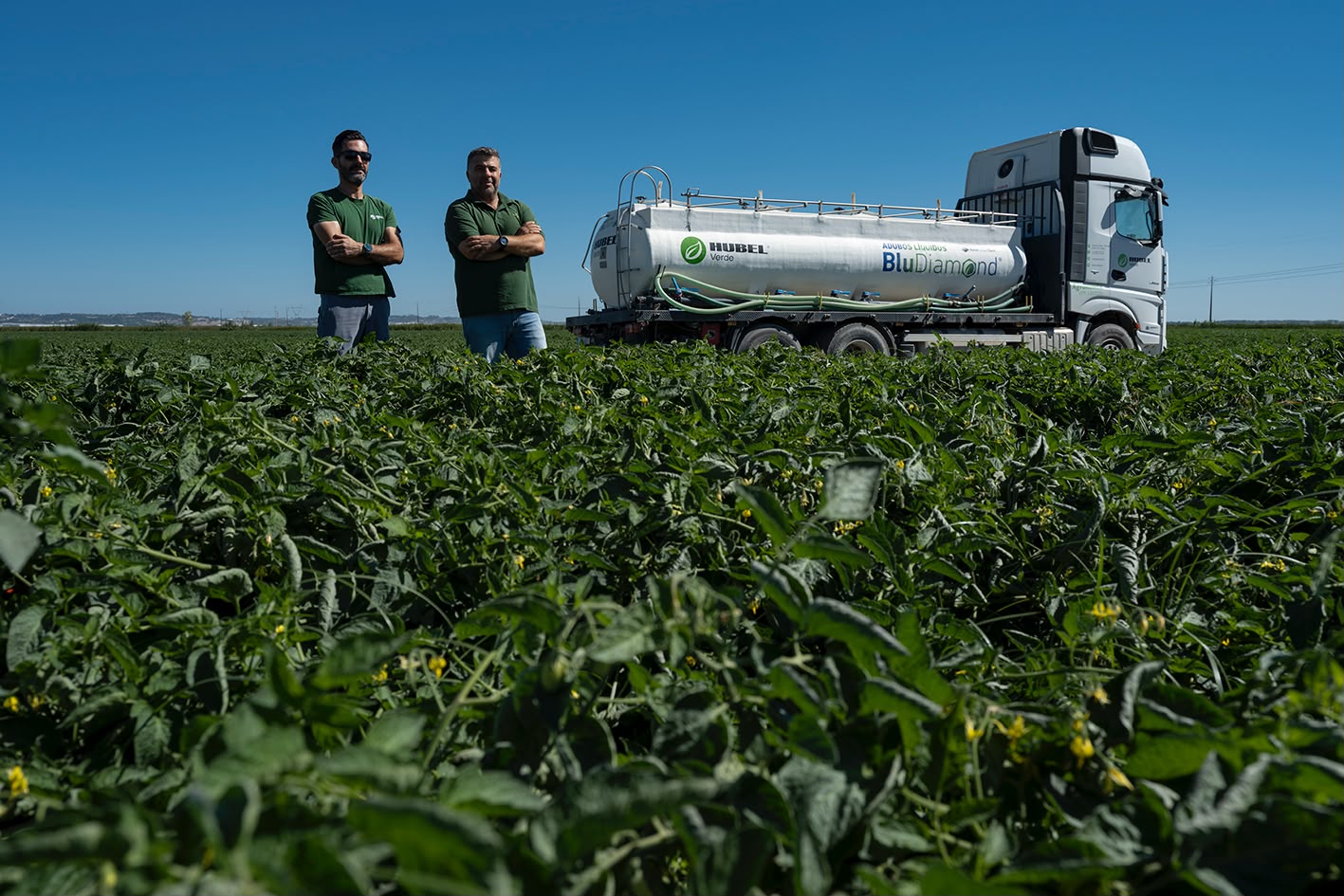
Fertilization strategies in Processing Tomatoes
Technical Recommendation for April
Filipa Aires, technical and sales consultant at Hubel Verde in the Santarém region, authored the April edition of the Recommendation by Hubel Verde, which focuses on customized fertilization strategies, an approach that is becoming increasingly important for ensuring efficiency and consistency throughout the growing season.
In the case of processing tomatoes - a demanding crop with well-defined growth cycles - nutrition has a direct impact on plant development and the final yield. More than just providing nutrients, it is essential to ensure that they are available at the right time.
Each crop is unique.
The strategy must be too.
Our agronomists will work with you to develop strategies tailored to the needs
of your farm.
Nutrition adjusted to the reality of the crop
For many years, fertilization was based on relatively static programs. Today, the variability of soils, climatic conditions, and crop needs calls for a more flexible approach.
“In processing tomato, nutrition must keep pace with the crop. It is not enough to provide nutrients; it is essential to ensure they are available at the right time”, says the technician.
Liquid fertilization allows for this flexibility, making it easier to adjust formulations and application rates throughout the growing cycle.
Liquid fertilization: adjust to the crop's stage
Using liquid fertilizers has been gaining importance, primarily due to their solubility and rapid uptake. When integrated into a crop management system supported by sap analyses, it allows for more efficient crop management and more informed technical decisions.
In a practical way, liquid fertilization allows:
- Adjusting nutrition throughout the cycle;
- Responding more quickly to the crop's needs;
- Easily integrating fertilization into irrigation systems.
When combined with solutions such as the BluDiamond line, it also offers:
- Improvement of the physical properties of the soil;
- Promotion of beneficial microbial activity;
- Increase in cation exchange capacity (CEC);
- Greater availability of nutrients for the plant;
- Better nutrient assimilation, through the presence of microcarbon and wetting agents;
- More efficient use of fertilizer units;
- Less energy required for assimilation;
- Favoring root development.
“With this type of solutions we can more easily adjust to what the crop demands throughout the campaign”, explains Filipa Aires.
More than just an alternative, it is an approach that allows for nutritional management better tailored to the dynamics of the crop.
Processing tomato: critical phases of nutrition
The tomato plant's life cycle - planting, vegetative growth, flowering, fruit development, and ripening - requires decisions tailored to each stage.
Filipa adds that “the strategy is built throughout the cycle. The important thing is to monitor and adjust”.
Initial development of the crop
In the establishment of the crop, it is essential to ensure conditions that favor the root development and the initial development.
“A good initial development is crucial, because limitations at this stage are difficult to recover from later”, warns Filipa Aires.
Solutions such as BluDiamond PhosphoStar, containing phosphorus, nitrogen, and zinc, they help stimulate root development, improve nutrient availability, and support the crop’s early growth.
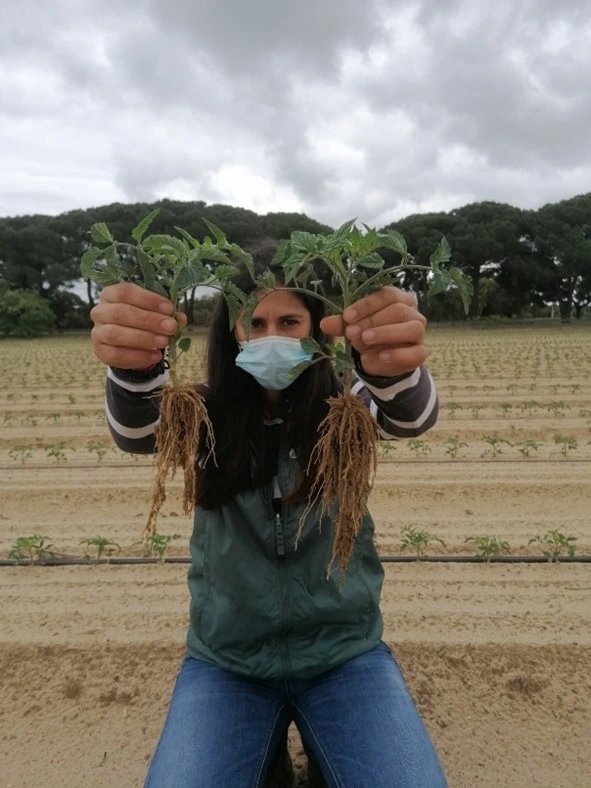 In addition, this solution also acts at the soil level, promoting microbial activity and contributing to improved physical and chemical conditions, which directly impacts the soil’s ability to absorb nutrients.
A good start conditions the entire evolution
of the plant throughout the cycle.
Vegetative growth: balance and development
During the vegetative growth, nitrogen plays a central role in the development of the plant.
Formulations such as the BluDiamond Classic 23-3-3 allow for:
- Support vegetative growth;
- Promote balanced plants;
- Maintain good photosynthetic activity.
Technical monitoring, combined with tools such as sap analysis, allows for adjustments to nutrient management based on the crop’s actual condition, ensuring greater precision throughout the growing cycle.
Quality and consistency
From pre-flowering to fruit filling, calcium plays an essential role in production quality.
Applying BluDiamond Nitrato de Cálcio helps to strengthen the cellular structure, improves tissue strength, and enhances fruit firmness. Its role in cell division and elongation makes it crucial at this stage.
 Flowering and fruiting: adjust the strategy
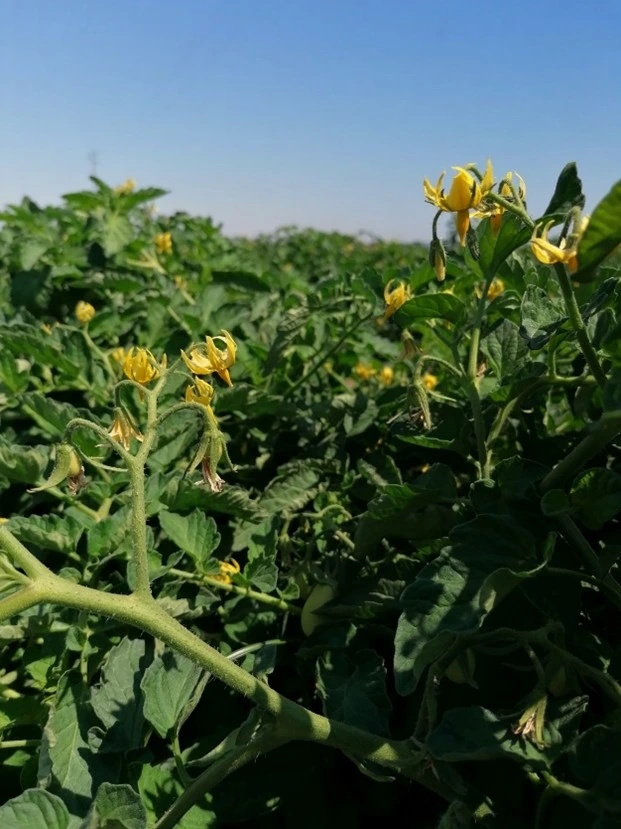
As the plant enters the flowering and fruiting stages, the nutritional strategy should evolve, placing a greater emphasis on potassium.
“It is at this stage that we start to work more directly for production and quality”, emphasizes Filipa Aires.
Formulations such as the BluDiamond Classic 7-3-10 contribute to:
- Improve the size of the fruits;
- Increase quality;
- Favor the accumulation of soluble solids (ºBrix).
Potassium plays a central role here in regulating the physiological processes associated with fruit development.
Final stage: make a decision based on the condition of the crop
In the final stage, solutions such as the BluDiamond Classic 0-0-15 can be used, depending on the crop's nutritional status.
Decisions should always be supported by field observations and tools such as sap analysis. There is no one-size-fits-all approach: each growing season, soil type, and weather condition requires adjustments.
Sap analyses: support for decision-making in the field
Conducting sap analyses makes it possible to assess the plant's nutritional status in real time, complementing field observations.
"It's a very useful tool for determining whether the plant is responding as expected and for making informed adjustments to its nutrition”, says Filipa Aires.
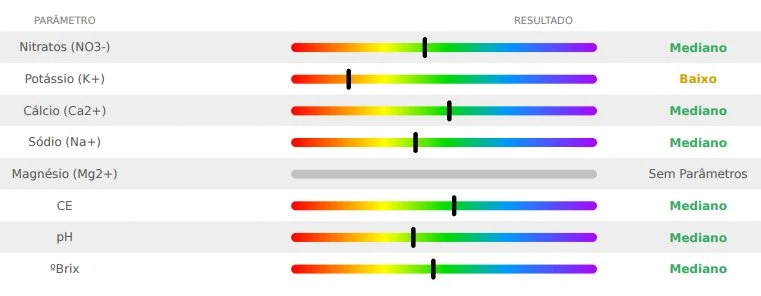
This approach allows to:
- Identify nutritional imbalances early;
- Adjust fertilization throughout the cycle;
- Support technical decisions based on data.
The information collected, along with field observations, technical recommendations, and suggestions for action, is integrated into monitoring tools such as FieldWork.
This platform allows users to record and monitor crop progress throughout the growing season, organizing the information and facilitating decision-making in the field.
Nutritional efficiency: more than just applying nutrients
The goal is not just to provide nutrients, but to ensure that the plant can use them efficiently.
“When we adjust nutrition to the timing of the crop, we achieve greater efficiency and reduce waste.”
This approach makes it possible to improve the efficiency of the production system, reduce losses, and optimize crop profitability.
Tailored fertilization: a practical approach in the field
Fertilization is no longer a fixed practice but has become part of a dynamic strategy based on diagnosis, technical monitoring, and adjustments throughout the cycle.
In industrial tomato, this approach allows for better responses to the demands of the crop and the conditions of the campaign.
Decisions adjusted throughout the cycle
Tailored fertilization allows aligning nutrition with the development of the crop, promoting more balanced and productive plants.
Plan, adjust, and monitor — this is the basis for an
efficient fertilization.
If you need support to apply these strategies in your farm, talk to us. The Hubel Verde team is available to assist in the field and adjust solutions to the reality of your farm.
Contact us
Do you have a question or need support for your crop? Send us your request and we will get in touch.