Assisted pollination
With the disappearance of natural pollinators, the importation of crops to regions where their natural pollinator does not exist, or unfavorable weather conditions during flowering, the assisted pollination system proves to be an important step in maximizing crops.
This process is not intended to replace the work of bees, but rather to complement it, enhancing the crop and ensuring a significant increase in yield. This approach is based on a deep technical knowledge, as each crop requires specific treatment.
Each crop is unique.
The strategy must be as well.
Our agronomists will work with you to develop strategies tailored to the needs
of your farm.
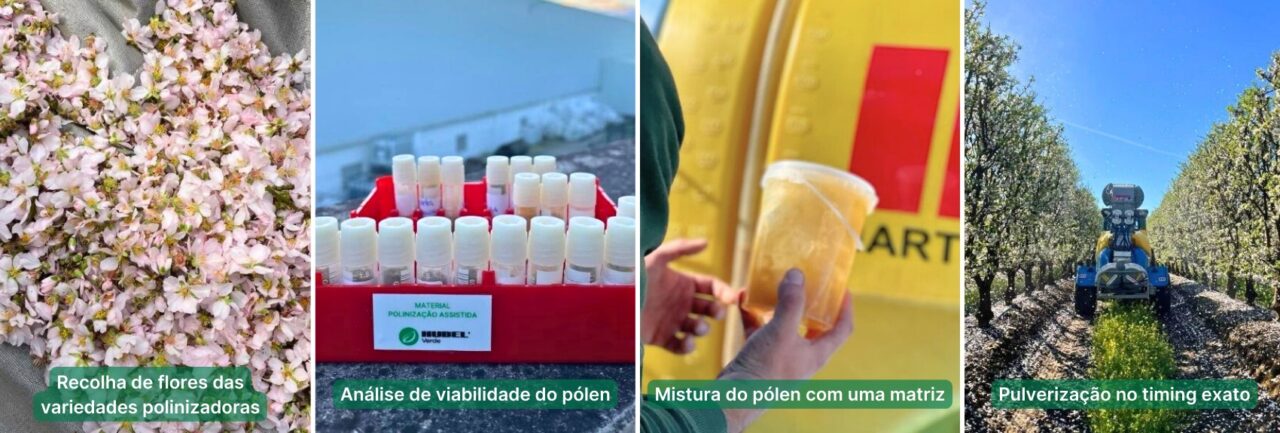
Methodology
Results
Almond grove, Figueira dos Cavaleiros
Variety: Bellona
Difference of 32.4% of the total production.
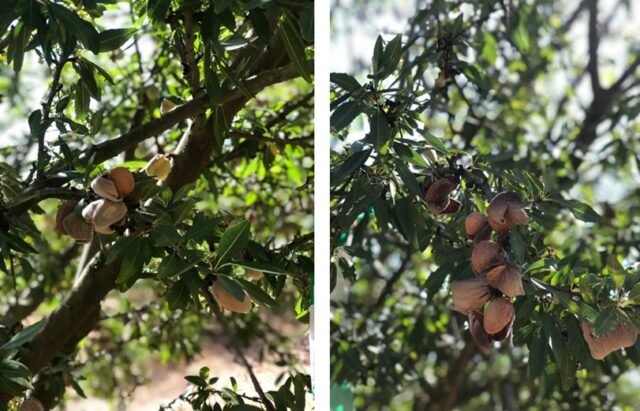
Fruits (var. Bellona) – Before harvest Control on the left and Treated on the right
Thus, there was a Production Difference (kg/ha) of 201 Kg/ha.
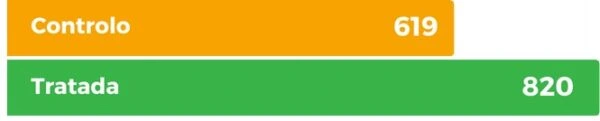
Production and difference in production between Control and Treated plots. Data provided by the producer.
Almond grove, Beringel
Variety: Soleta
Difference of 19% of the total production.
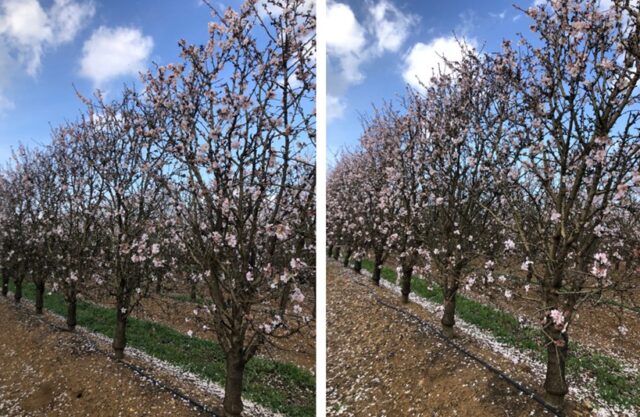
Control plot on the left and Treated plot on the right - 3rd application of Assisted Pollination
In summary, there was a Production Difference (kg/ha) of 154 Kg/ha.

Production and difference in production between Control and Treated plots. Data provided by the producer.